


Our strategic objectives
Included in the 2024-2028 Sustainability Plan we have three strategic objectives pertaining to our environmental and natural resource conservation path.
To combat and adapt to the climate crisis, protect resources and water in particular, promote the circular economy, conserve biodiversity: these are our commitments as leading sustainable infrastructure operator.
Included in the 2024-2028 Sustainability Plan we have three strategic objectives pertaining to our environmental and natural resource conservation path.
The “Infrastructure resilience and safety” target refers to the actions for optimising and developing the water networks and electrical grids.
“Water conservation” includes projects aimed at the efficient use and regeneration of water resources.
“Environmental protection” includes projects pertaining to emissions reduction, resource circularity and biodiversity and ecosystem conservation.
INFRASTRUCTURE RESILIENCE AND SECURITY | WATER PROTECTION | ENVIRONMENTAL PROTECTION |
|---|---|---|
Strategic aqueduct works | Loss reduction | Circularity of resources |
Wastewater treatment and sewerage system optimisation | Water resilience | Decarbonisation |
Power grid strengthening | Water quality | Biodiversity |
Network digitalisation |
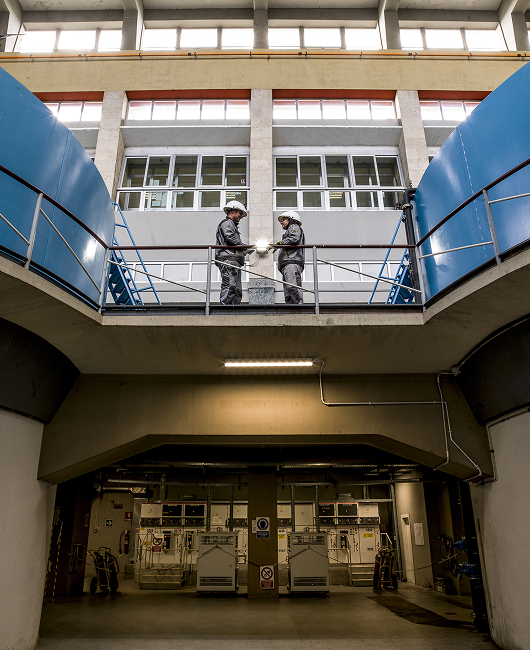
To upgrade and increase the resilience, flexibility and security of water and electricity infrastructures represents a priority for us, with the aim of providing a better service and enhancing the adaptability of infrastructures to climate change. In addition to major investments in infrastructure, the target includes the development of programmes for the digitalisation and remote control of networks with a view to optimising their efficiency.
Action line | Action/Company | Target @2028 | Actual 2025 | Actual 2024 |
|---|---|---|---|---|
Strategic aqueduct works | Strategic aqueduct works | Peschiera, planning/authorisation process | Process completed |
|
Marcio, works on 4 infrastructures | 71% | 47% | ||
Other aqueduct works | Realisation of 32 infrastructures | 4 works completed, | 2 works completed, |
Action line | Action/Company | Target @2028 | Actual 2025 | Actual 2024 |
|---|---|---|---|---|
Optimisation of sewerage | District metering of the sewerage network (Acea Ato 2, Acea Ato 5) | 1,930 km of network | 542 |
170
|
Upgrading of wastewater treatment capacity | Work on 28 | 13 | 8 |
Action line | Action/Company | Target @2028 | Actual 2025 | Actual 2024 |
|---|---|---|---|---|
Strengthening | Network expansion | 600 km prepared for connection of new loads | 191 km | 80 km |
Network continuity | Works on 240 km of LV network 840 km of MV network | 136 km LV | 63 km LV | |
285,000 MV users + 35,700 LV users | 54,540 users | 54,256 users | ||
Strengthening | Works on 34 primary and 3,800 secondary substations | 12 PS | 13 PS |
Action line | Action/Company | Target @2028 | Actual 2025 | Actual 2024 |
|---|---|---|---|---|
Network digitalisation | Broadband connectivity (areti) | Work on 2 primary and 6,100 secondary substations | PS in progress | PS in progress |
Smart Grid (areti) | 333,000 population equivalent beneficiaries | In progress | / | |
Business continuity (areti) | 0 interruptions at the control room | 8 interruptions | 2 interruptions | |
Network remote control (areti) | 4,600 LV substations | 599 LV | 603 LV | |
Installation of 2G meters (areti) | 770,000 meters installed (total of 1,750,000 by 2028) | 209,464 meters installed | 446,351 meters installed | |
Electricity consumption flexibility of water utilities | 1 MW of flexibility enabled | 0.3 MW | / | |
Remote control of water and sewer systems (Acea Ato 2, Acea Ato 5) | 1,828 sewage and wastewater treatment plants remotely monitored and controlled | 45 | 25 | |
4,248 drinking water treatment plants remotely monitored and controlled | Target achieved | 3,717 |
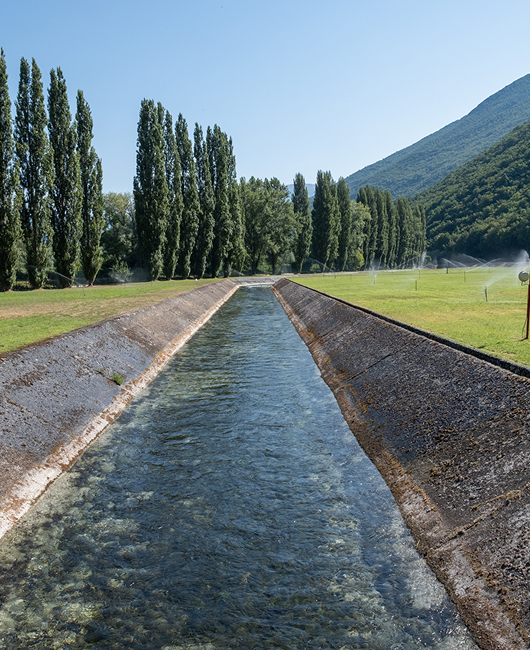
Water is not only a resource: it is the foundation of life, economic stability and industrial progress. Acea Research & Studies has published the “European water resilience strategy” position paper with the aim of providing an in-depth analysis of the most urgent challenges for the water sector. We intend to be an active participant in the transformation process, by offering a comprehensive overview of the sector’s vulnerability and outlining key solutions.
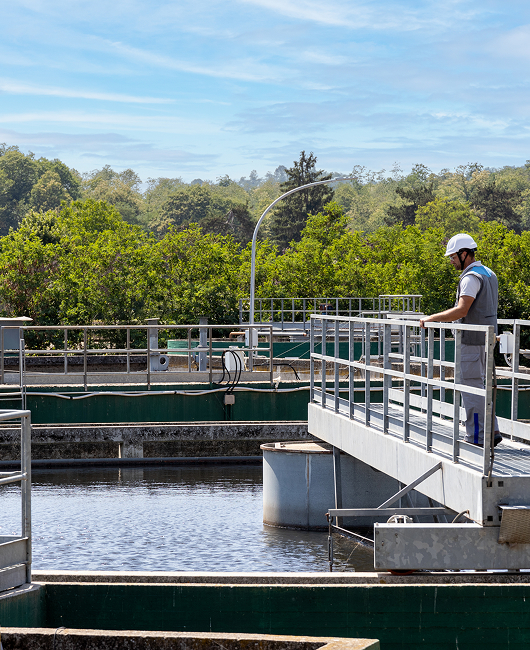
In our capacity as Italy’s leading water services operator, we feel particularly responsible and have specific competencies with regard to water conservation and regeneration, also from a perspective of adapting to the effects of climate change. More specifically, we have planned major investments for the reduction of leaks and the continuous enhancement of drinking water quality, with a view to protecting the health of the community. At the same time, we are working to enhance the quality of purified water, enable its recovery and reutilisation and preserve the salubriousness of the natural environment to which it is returned.
Our commitment has been recognised also at institutional level: in 2025, we received from ARERA a reward of over €36 million for the Technical Quality of the integrated water service, which valorises performances in terms of service continuity, loss reduction and the quality of purified water. A process that drives us to constantly develop innovative projects.
Action line | Action/Company | Target @2028 | Actual 2025 | Actual 2024 |
|---|---|---|---|---|
Water quality | Improving wastewater treatment performance (Acea Ato 2) | Non-compliant samples/total samples analysed <7.8% (Arera M6 ind.) | 5,20% | 7,77% |
Wastewater effluent quality (Gori) | Reduction of total suspended solids >91% | 97% | 93% | |
Water monitoring (Acea Infrastructure) | 55 PFAS and emerging organic micropollutant parameters | 6 parameters | 8 parameters | |
50 microplastic monitoring surveys | 15 monitoring surveys | 20 monitoring surveys |
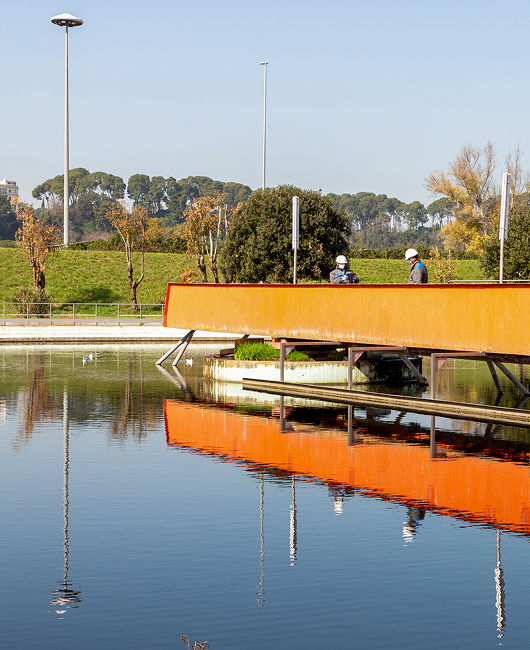
The national agreement signed with Intesa Sanpaolo for the protection and sustainable management of water in production processes is intended to develop system-wide initiatives with innovative solutions to promote the efficient use of water resources through technological advisory services, and the reuse of purified water, with positive impacts for the environment, the territories and the companies. Furthermore, within the framework of the said collaboration, a water sector Observatory has been set up, with a view to fostering the dissemination of a new cultural approach to the utilisation of water. In this connection, two reports have been published dedicated to the evolution of the sector and the challenges associated with sustainable management of the resource.
This strategic objective includes the lines of interventions and actions in support of the energy transition, the fight against climate change and the changeover towards circular economy models with innovative projects for the regeneration and recovery of resources, alongside our commitments for the safeguarding of biodiversity and ecosystems.
Action line | Action/Company | Target @2028 | Actual 2025 | Actual 2024 |
|---|---|---|---|---|
Decarbonisation | Photovoltaic systems (Acea Produzione) | 870 MW realised and operational | 9 MW | 50 MW |
Photovoltaic systems for self-consumption | 15 MW installed | 2.5 MW | 0.8 MW | |
Energy efficiency | 38 GWh of energy saved | 12 GWh | 10 Gwh | |
Biomethane production | 1.2 Mcm per year | 0.88 Mcm | 0.12 Mcm | |
Electricity | 0.5 TWh per year | 0.3 TWh | 0.3 TWh | |
Electricity sales | 75% of total sales | 2.96 TWh | 2,5 TWh | |
ESCO installations | 40 MW installed at customer sites (PV and CHP) | In progress | / | |
Revamping | 8% | Preliminary activities have been carried out | / |
Action line | Action/Company | Target @2028 | Actual 2025 | Actual 2024 |
|---|---|---|---|---|
Circularity | Wastewater reuse (Acea Ato 2, Gori) | 7 Mcm per year for reuse | 3.8 Mcm | 2.8 Mcm |
Increased volume of processed waste | 1.9 Mt per year | 1.6 Mt | 1.7 Mt | |
End of Waste material recovery | EoW > 85% | 79% | 83% | |
Sand recovery from wastewater treatment “soil washing” | 65% of material recovered | Plant in the start-up phase | - | |
Reduction in sewage sludge | 84 kt | 95 kt | 115 kt | |
Sludge recovery for biolignite | 19 kt per year of sludge recovered | In progress | - |
Action line | Action/Company | Target @2028 | Actual 2025 | Actual 2024 |
|---|---|---|---|---|
Biodiversity | Removal of high voltage pylons (areti) | 115 pylons | 10 pylons | 49 pylons |
620 m2 reclaimed land in high biodiversity areas | 200 m2 | 200 m2 | ||
Sarno basin reclamation (Gori) | Elimination of 69 unauthorised discharge points | 38 discharge points | 4 discharge points | |
Biodiversity (abroad) | Árboles para el Merendón (Aguas de San Pedro) | +350,000 trees | 85,948 | 83,331 |
We want to contribute to global objectives for combatting climate change by developing initiatives aimed at protecting people and the environment. In addition to interventions for the resilience of the water networks and electrical grids, we invest in energy efficiency, emissions reduction and renewable energy production programmes. Moreover, Acea offers its customers renewable energy covered by “Guarantee of Origin” certification and gas with CO2 emissions compensation through the purchase of carbon credits.
As part of this course, in 2025 we consolidated our international positioning by taking part in COP30 in Belém, where we shared our vision for ecological transition, with a focus on the resilience of infrastructure and on the centrality of water resources in climate adaptation processes. At the same time, during the year we established the Robotic Joint Lab together with the Italian Institute of Technology, with the aim of developing advanced robotic solutions to support the management, security and efficiency of water, energy and environmental infrastructures.
Since 2019 we have been conducting climate scenario analyses in reference to Acea's various businesses according to the ISSB-TCFD system recommendations, which have now been integrated into the ESRS standards, in order to continue fine-tuning our ability to understand and manage the physical and transition risks for our assets, as well as the potential opportunities related to the new scenarios.
Read more about COP30
Read more about the Robotic Joint Lab
Our decarbonisation programme envisages above all the development of energy from renewable sources and the use and offer to our customers of electricity covered by Guarantee of Origin.
Energy produced from renewable sources
Energy for consumption, purchased with GO
Energy sold with GO
Trees planted in the Merendòn area (Honduras)
Data as at 31 December 2025
Our climate change emissions reduction objective is validated by the Science Based Targets initiative (SBTi), in keeping with the Paris Climate Agreement trajectories, aimed at limiting the increase in global temperature to well below 2°C with respect to pre-industrial levels. Our current commitment, which envisages objectives for 2032, will be integrated with long-term goals.
The decarbonisation levers identified for achieving the SBT goals mainly include: the growth in renewable energy production (Scope 1 target); the implementation of energy efficiency interventions on plants and locations and increase in the purchase of energy with guarantee of origin (Scope 2 target); an upturn in the share of energy sold with guarantee of origin and the progressive reduction in gas volumes managed, in line with developments in the market which anticipates increasing electrification of consumption (Scope 3 target).
Targets for 2032 with respect to 2020:
SCOPE 1
Reduce by 56% the intensity of direct emissions per unit of energy produced (tCO2e/ MWh).
SCOPE 2
Reduce by 32% the indirect emissions associated with electricity withdrawn from the grid (tCO2e).
SCOPE 3
Reduce by 30% the indirect emissions associated with the sale and distribution of methane gas (tCO2e).
SCOPE 1+3
Reduce by 56% the intensity of indirect emissions pertaining to the sale of electricity (tCO2e/MWh).
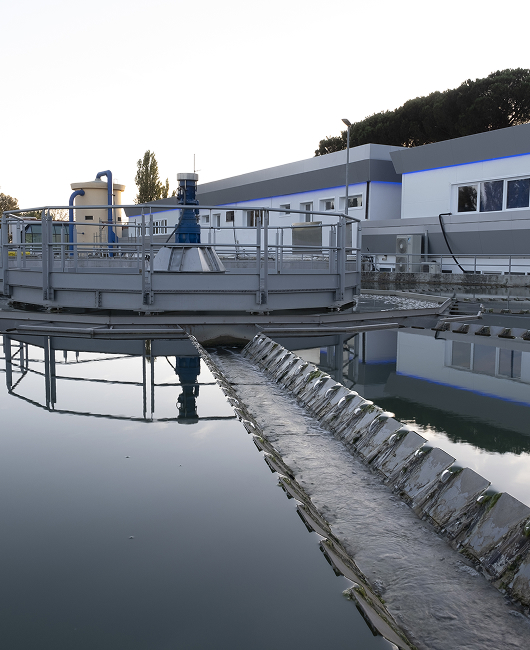
We give priority to the implementation of resource circularity processes, via the adoption of innovative solutions for optimising consumption and recovering and reutilising resources. More specifically, this focus concerns the Water business, with the execution of specific projects for the recovery and reuse of wastewater and purified water, and the Environment business, for the recovery of waste and energy and product valorisation.
Within this framework, in 2025 Acea Ambiente signed an agreement with Versalis to develop circular plastic recycling supply chains, with the aim of analysing the waste streams and producing high quality recycled materials also using advanced technologies.
These initiatives are supported by our already consolidated operating activities, which include the treatment of waste for the recovery of materials (e.g. glass, paper, metals); the production of energy from waste via the waste-to-energy conversion process; the generation of biogas from composting; the management of liquid waste, from which we recover useful resources; the production of high-quality compost.
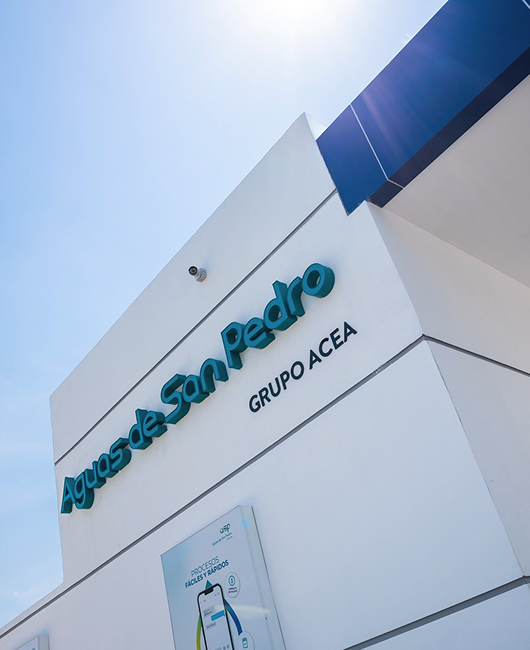
In the 2024-2028 Sustainability Plan, we commit to enhancing biodiversity through our presence in Honduras with the company Aguas de San Pedro, which manages the integrated water service for the city of San Pedro Sula. In particular, our objective is to plant 350 thousand new trees in the Merendón area, in addition to the million already planted, helping to capture emissions, conserve biodiversity and support the development and employment of local communities.