


Acea’s role in protecting urban wildlife and contributing to urban biodiversity through artificial nests installed on Acea Ato 2 water storage facilities.
We protect biodiversity and the habitats of species present in the areas where we operate, contributing to Goal 15 of the 2030 Agenda for Sustainable Development, which aims to protect, restore and promote the sustainable use of terrestrial ecosystems.
Around 20 pairs of peregrine falcons (Falco peregrinus) currently nest in the city of Rome, and the artificial nests installed on Acea Ato 2 water storage facilities have helped the species establish a stable presence in urban areas. Several pairs now nest on Acea facilities, consolidating the company’s role in protecting urban wildlife.
Over recent decades, the peregrine falcon (Falco peregrinus), once threatened, has undergone a marked process of urbanisation.
This trend is driven by the high availability of food sources in urban environments, where abundant populations of potential prey, particularly starlings and feral pigeons, are present.
Despite this abundance of food, urban environments offer few suitable nesting sites, mainly due to human disturbance and the scarcity of cavities or structural niches for laying eggs and raising chicks.

For over 20 years, Acea Ato 2 has worked alongside Ornis Italica, an ornithological association, to create safe environments by installing artificial nests on Acea Ato 2 water storage facilities where birds of prey can nest, facilitating the species’ establishment.
The initiative highlights the presence of wildlife in urban areas and demonstrates how Acea’s infrastructure plays an active role in biodiversity conservation, turning its facilities into urban habitats.

Webcams installed on the nests stream live footage, offering the public a unique opportunity to observe every stage of the reproductive cycle up close, from courtship and egg-laying to the growth and fledging of the chicks, fostering greater awareness and a deeper connection between people and nature, even within an urban environment.
In Rome, the first peregrine falcon nesting took place in 2005, in a nest box installed at Sapienza University of Rome. The pair “Aria and Vento” was the first in Europe to be monitored in real time via webcam. A Roma, la prima nidificazione dei falchi pellegrini è avvenuta nel 2005, in una cassetta-nido installata presso l ’Università La Sapienza; la coppia “Aria e Vento” è stata la prima in Europa ad essere seguita in tempo reale tramite webcam.
In recent years, several pairs have chosen Acea Ato 2 facilities as nesting sites:
Webcams on the nests enable documentation of the species’ behaviour in an urban environment and serve as an effective tool for scientific outreach and raising awareness of the value of biodiversity in cities.

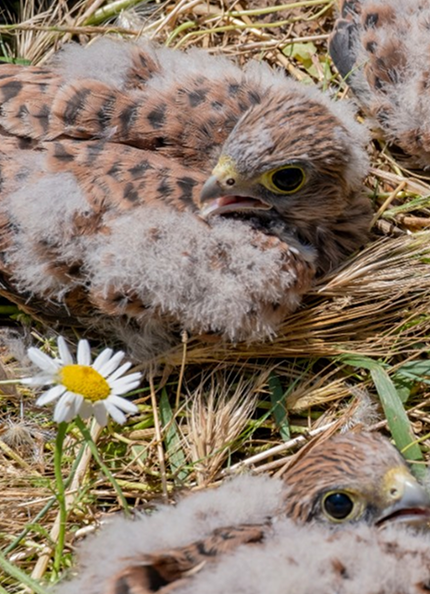
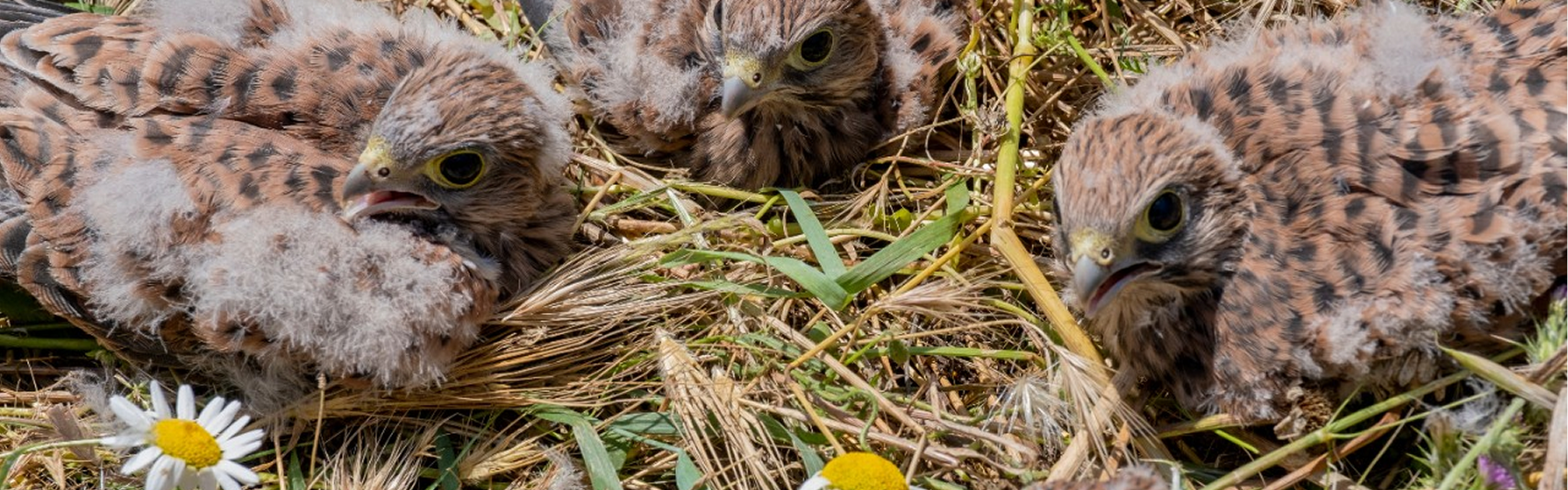
At the Acea Water Centre in Monte Mario, the peregrine falcon pair “Agrippina” and “Vespasiano” welcomed three chicks. The young birds underwent morphometric measurements, blood sampling for genetic and parentage analyses, and ringing, aimed at monitoring the reproductive cycle, the species’ genetic variability, and the traceability of individuals over time. The young falcons are expected to fledge within approximately one month.
This Acea Ato 2 initiative serves as a concrete example of how urban environments can be transformed into spaces for nature conservation. The project highlights the importance of protecting and enhancing natural resources, demonstrating how infrastructure and biodiversity can coexist harmoniously, while also fostering the presence of wildlife in urban settings.